
300+ Year Nath Sampraday Lineage
The Mandir tradition is presented as a continuous Nath Sampraday lineage sustained through long-standing devotional practice.

Sacred Heritage • Public Record • Collective Duty
300+ Years of Nath Sampraday Living Heritage | Registered Public Trust No. 144/1966 (Rajasthan Public Trust Act, 1959) | Khasra No. 42, Ambapol Bahar, Udaipur.
The Mandir tradition is presented as a continuous Nath Sampraday lineage sustained through long-standing devotional practice.
Stewardship references are anchored to the custodial role of Mahant Hansnathji within the Mandir's heritage and public trust responsibilities.
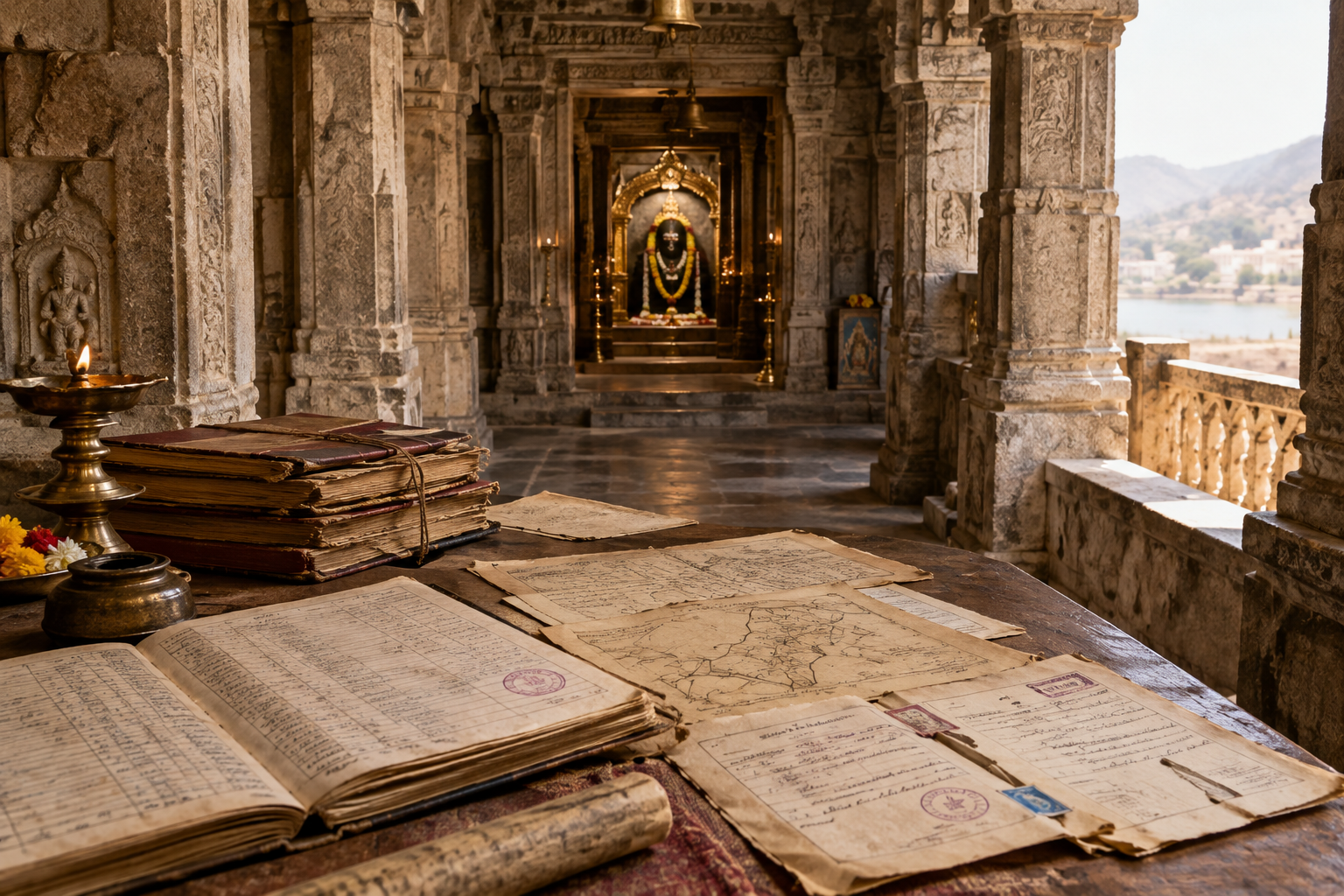
Documentary evidence includes Revenue Settlement references, specifically Khasra No. 42, for public review and heritage verification context.
Legal Trust Badge
Recognized under the Rajasthan Public Trust Act, 1959, this entry is presented as a formal institutional record marker.
Established in the Mewar State era and recorded under Settlement records (1924, 1937) and Devasthan Certificate No. 144/1966, the sacred estate belongs in law to the Deity Mahakaleshwarji. This documentation is presented with accountable trust stewardship so the public can review heritage facts with clarity and confidence.
Proof Pillars
A continuous Nath tradition preserves ritual authority and temple identity across generations.
Revenue records, archival references, and mapped entries are presented for open verification.
Contributions and seva communications are structured with clarity on purpose and usage.
Heritage protection is framed as a civic and devotional duty carried in the public interest.
A reverent, documented catalog of temple seva and devotional offerings prepared for dignified participation across households, pilgrims, and supporters.
(रुद्राभिषेक सेवा)
Sacred ritual archana conducted inside the sanctum according to Nath Sampraday traditions.
(सात्विक प्रसाद)
Pure, traditional temple dry prasad and bhog delivered directly to devotees' homes.
(रुद्राक्ष एवं तुलसी माला)
Consecrated japa malas and traditional devotional accessories sourced and blessed at the temple.
(गौसेवा एवं चारा सहयोग)
Daily nutritional care, fodder, and medical support for indigenous cows under Vrushabhdhwaj Gausewa Mandal Mahakaal.
(धार्मिक साहित्य)
Books, stotrams, panchang, and historical archives documenting Mewar's sacred monastic heritage.
(विरासत संरक्षण सेवा)
Dedicated support toward certified archival research, court advocacy, and documentation defending the 18-Bigha temple estate (Khasra No. 42).
Common Questions
Brief answers to the most important trust, process, and participation questions.
When heritage is documented with dignity, collective action becomes trustworthy.
Sign the Protection Appeal.